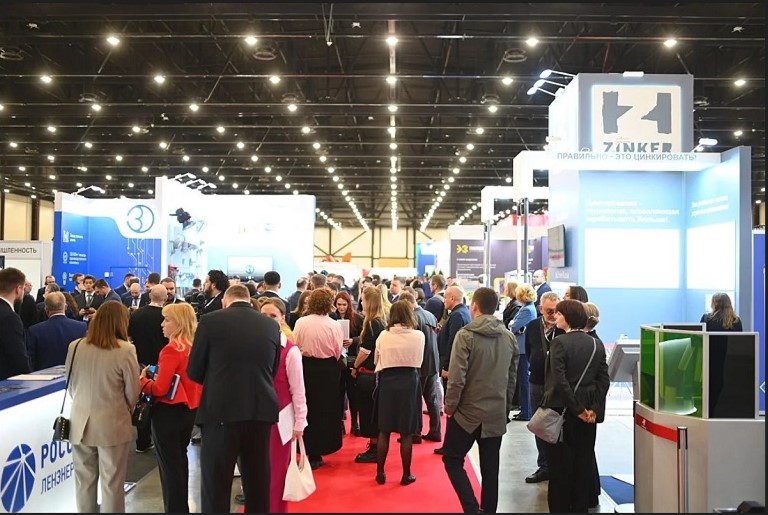
From April 22 to 24, St. Petersburg’s Expoforum Convention and Exhibition Centre hosted the Russian International Energy Forum, or RIEF, supported by the Government of St. Petersburg. The Forum traditionally serves as one of the industry’s top discussion venues, where the key priorities for the energy sector’s development are considered. This year, the event has brought together 5,000 participants from 7 countries. At the exhibition program, 57 companies have demonstrated their projects and services, whereas 247 delegates have taken part in the convention program. 1,000 business meetings were accomplished in the Business Matchmaking Centre.
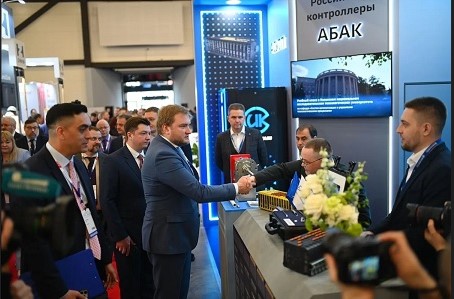
The Forum commenced with an official tour over the exhibition by the delegations attended by Sergey Kropachev, Vice-Governor of St. Petersburg; Alexey Murovets, Acting Chairman of the Committee on Energy and Engineering Support of St. Petersburg; and Stanislav Protasov, Chairman of the Tariff Committee of St. Petersburg.
The RIEF 2026 convention program contained seven topical tracks, thus covering a wide array of issues – from the tariff policy and energy security to digitalisation and sustainable growth.
The pinnacle event in the convention program was the Plenary Session ENERGY DEVELOPMENT IN 2026–2031: ENSURING BALANCE. The participants discussed a series of interconnected challenges, namely increasing energy deficiency, high level of deterioration in generating capacities, the need to balance tariff affordability for consumers against investment attraction required to upgrade the industry.
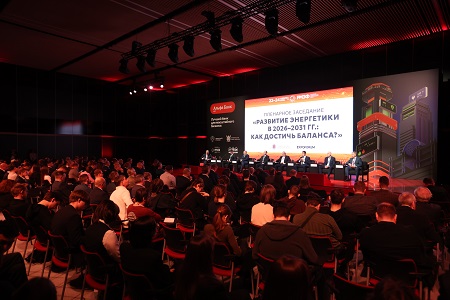
As noted by Alexey Ilchuk, Head of Analytics in the Electric Power Industry Department at the Analytical Centre for the Fuel and Energy Industry of the Ministry of Energy of the Russian Federation, the average age of generating facilities is about forty years, which puts the infrastructure renovation and investment attraction on the top of the critical tasks to-do list. Moreover, the system is additionally affected by the growing demand from energy-intensive sectors. According to Igor Kuzmin, CEO of Rosseti Lenenergo, ensuring balance in this matter is a challenge extraordinarily complex both in terms of engineering and economics.
The experts reported that the volume of energy supply deficiency in Russia keeps rising and is accompanied by a surging demand, first of all, in the Far East and Siberia, but also caused by expansion of data processing centres and mining operations, as well as growth of aluminium production and the oil and gas industry. These new challenges shall be reacted to with a set of arrangements, including introduction of regional energy clusters, accelerated financing for generation assets construction, development of demand management systems and price coordination based on the consumption scopes.
Besides, the experts presented possible prospects for the industry’s future, ranging from costs optimisation and the easing of regulatory requirements to a broader adoption of renewable energy sources. As Alexey Zhikharev, Director of the Renewable Energy Development Association and CEO of ENSOLVE, pointed out, solar and wind power plants had a chance to provide an effective response to the energy deficiency. The discussion participants emphasised that without comprehensive solutions such as long-term planning, infrastructure development and improved financing mechanisms, Russia may lose its competitive advantage, which is affordable electric energy.
Furthermore, the participants noted that the industry’s development could be aided by the easing of requirements for local production of Russian-made equipment, elimination of excessive environmental demands, standardisation of design and structural solutions, advancement of technologies, increasing the unit capacity of new power units introduced and enhancement of forecasting data collection.
At the conference TARIFF CROSSROADS: WHAT WAYS IS THE ENERGY INDUSTRY GOING TO FOLLOW IN THE SHORT TERM? discussions were focused on switching the regions to differentiated tariffs, a move that could help prevent cross-subsidisation and stabilise the industry’s economics. The experts reported that in the coming years, reducing the thresholds for subsidised consumption would make these changes quite tangible for the citizens, especially as regarded to the private housing sector, while in certain regions tariff increases might reach economically justified levels. The speakers specially focused on the search of a balance between the interests of consumers and energy companies, energy efficiency enhancement and introduction of new approaches to tariff regulation – including digital tools and market mechanism elements.
As Ekaterina Anonen, Deputy Chair of the Tariff Committee of St. Petersburg, noted, switching to differentiated tariffs in St. Petersburg had not really included issues of any kind. This was because there were no rural premises, a very small number of private houses and moreover extensive gasification within the city. At the same time, St. Petersburg has not yet managed to eliminate cross-subsidisation. The cross-subsidy scope remains at the level of 7.8 billion roubles.
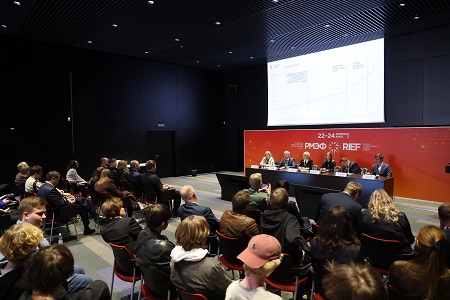
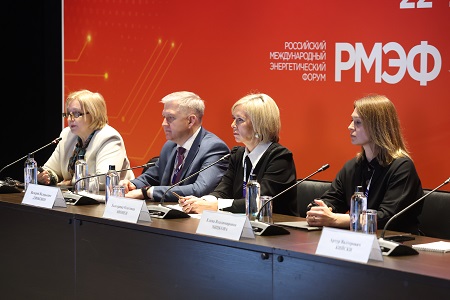
The panel discussion LOSS-FREE ENERGY: WAYS TO OVERCOME THE BARRIERS AND INTRODUCE SOLUTIONS was dedicated to energy saving growth, energy efficiency enhancement and scaling of successful regional practices. The participants mentioned that deteriorated utilities, high costs of technologies and limited access to financing establish barriers in implementation of solutions, while the part of digital systems, distributed generation and energy storage devices continues to grow. The experts concurred that energy saving is an essential condition to ensure the industry’s growth in the context of rising resource costs.
Mikhail Andronov, CEO of RUSENERGOSBYT, announced that energy in Russia would steadily become more and more expensive.
“Based on the information provided by the NP Market Council Association, we can see that in the coming years Russia is going to unhappily lose its status as a country with cheap electric energy. Maybe in 2030, we will overtake China and then the USA in terms of prices, somewhere around 2035 – France, and from there, Germany will not be a short way off. We are not encouraging you to start saving right now, but the time has come to start thinking about it as soon as possible”, the speaker declared.
During the conference SUSTAINABLE DEVELOPMENT OF THE FUEL AND ENERGY SECTOR ALONG WITH THE MUNICIPAL INFRASTRUCTURE. SAFETY. RELIABILITY. EFFICIENCY, the issues related to operation and improvement of reliability in the energy and utility infrastructure were talked about.
Vladislav Ozorin, Chairman of the Scientific Expert Board of the National Association of Energy Enterprises (NAEE) and President of Association of Energy Enterprises in the North-West Federal District, spoke about a reform in control and supervision activities in the energy sector, changes in the industry-related legislation and their impact on the sustainable operation of the industry. The speaker outlined that the reforms in control and supervision activities in Russia were made to reduce the administrative burden on businesses, increase control efficiency and switch to a risk-oriented approach. The main blocks of the reforms are associated with the so-called “regulatory guillotine,” introduction of new methods and digitalisation.
The conference participants discussed how centralisation processes in the electric power industry are unfolding, how challenges related to heat supply are being addressed, and moreover they assessed mechanisms used to attract investments and introduce monitoring technologies. The experts specified that sustainable development in the fuel and energy sector is possible only in case effective regulations are complemented with infrastructure upgrade and technological renovation.
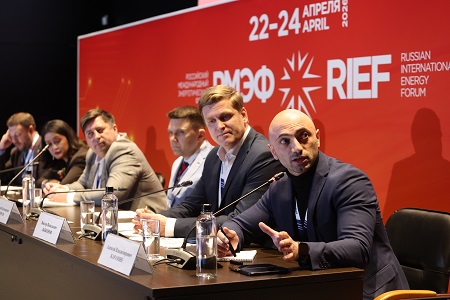
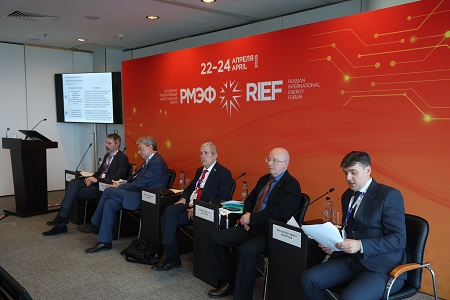
The RIEF 2026 delegates paid special attention to the energy sector development in remote territories. Thus, at the conference HEAT IN REMOTE LANDS: HOW ENERGY RESOURCES CAN BE PROVIDED FOR NORTHERN BOUNDARIES, the participants focused on the issues of ensuring the energy independence of Russia’s northern regions, which are known for their harsh climates, remoteness from the mainland and high energy supply costs. They talked about the need to switch to distributed generation, use of LNG, about renewable energy sources and development of local infrastructure. The experts presented certain practices designed to upgrade the deteriorated diesel power stations in Yakutia and other regions, specifically noting that electrical energy net costs can be reduced in case up-to-date technologies and hybrid solutions are introduced.
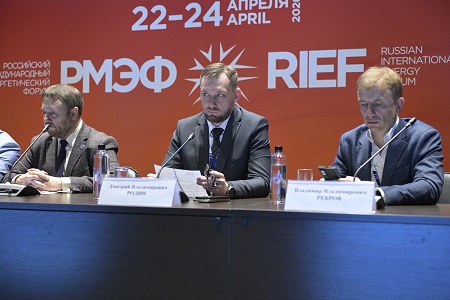
Vladimir Rebrov, CEO of Converter Equipment Laboratory (Systemotechnika), shared his experience in implementation of the hybrid energy facilities in the Arctic Region. According to him, local solutions, which ultimately lead to global system changes, have an essential part in enhancement of Russia’s electric energy industry reliability and sustainability. In particular, the company had implemented several projects, namely automated hybrid energy facilities Dolinovka in Kamchatka Territory, Sasyr in the Republic of Sakha (Yakutia), a mining and processing plant in Magadan Region, as well as a stand-alone wind-diesel power station in Nenets Autonomous Region.
At the session UPGRADING INDUSTRIAL STRUCTURE AND ENSURING CYBER SECURITY FOR THE FUEL AND ENERGY SECTOR, the participants considered AI introduction and ways of protecting the critical infrastructure in the context of growing cyber risks and further digitalisation. In the expert opinion, AI-powered technologies do not only enhance efficiency but also introduce new risks, from data distortion and telemetry spoofing to higher infrastructure vulnerabilities. Reliability of critically essential systems and use of trusted solutions remain of paramount importance.
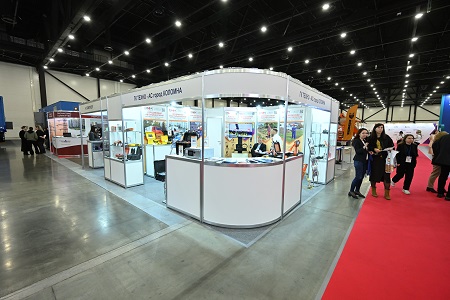
As part of the Forum’s exhibition program, the POWER & ELECTRICAL ENGINEERING INTERNATIONAL SPECIALISED EXHIBITION took place, showcasing state-of-the-art technological solutions for the industry. PIK PROGRESS demonstrated its Integral-325 system for smart metering and telemechanics, which can optimise energy consumption significantly. Rosseti Lenenergo together with the National Energy Company demonstrated multifunctional metering devices that also support e-vehicle charging. Parus electro showcased their solutions for charging stations and uninterruptible power supply units, while Spetskabel Plant presented a unique LAN cable designed for explosively hazardous environments.

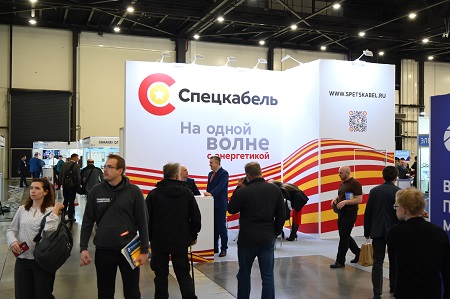
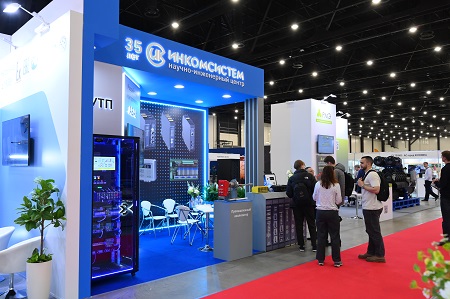
VELAN Plant exhibited a range of explosion-proof equipment pieces, Techno-AS introduced the visitors to their cable line monitoring solutions and Incomsystem showcased an industrial-grade gas analyser. Some of the corporate exhibitors were the ones who work with distributed generation, transformer equipment and electric transport. The exhibition demonstrated how manufacturers are currently responding to the market demands – they are ready to offer comprehensive high-tech solutions for the energy infrastructure.
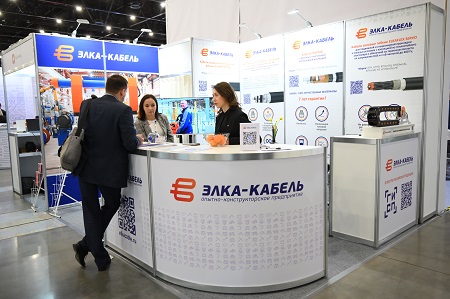
In 2026, the Forum has got a new scale thanks to the Competition for the Best Project presented at the Power & Electrical Engineering Exhibition, aimed at identifying and supporting the advanced projects that can contribute to development of the sustainable and eco-friendly energy sector. ELKA-Cable, a manufacturer of cable products, was recognised as the winner of the competition.
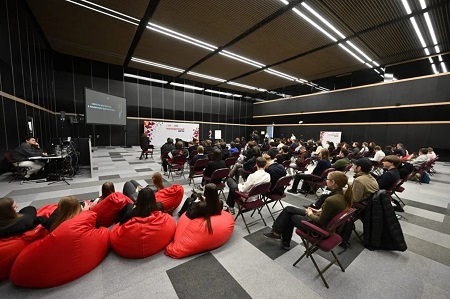
The Forum participants paid particular attention to the personnel training for the industry. Youth Day brought together students from specialised educational institutions and emerging professionals, who took their chances to get up-to-date knowledge, meet representatives of the leading companies and establish professional contacts. The participants were offered workshops on public speaking, leadership and key competencies progression.
As before, the technical tours became an important part of the Forum program. This year, the participants visited the Leningrad Nuclear Power Plant, where they learned about today’s electricity generation technologies. The second tour was to the Southwest wastewater treatment plants, which play a crucial role in keeping the region eco-safe.
To foster business interaction, the Business Matchmaking Centre was operated as part of the Forum, where suppliers and customers could negotiate to expand their partnerships and initiate new projects, too.
At the same time with RIEF 2026, Expoforum has also hosted Municipal Housing Complex of Russia International Exhibition, Corrosion Protection International Exhibition & Congress, Water Resources Conference and Exhibition, Pipeline Valves. Pumps Exhibition and Managing Companies Fair.
The Forum’s program was compiled in collaboration with IGRO Training Company, Power and Industry of Russia Publishing House, Scientific and Technical Council of Unified Energy System, Association of Energy Enterprises in the North-West Federal District, Scientific Expert Board for Energy, Energy Saving and Energy Efficiency Enhancement Legislation Implementation Monitoring, National Association of Energy Enterprises and ABP2B.
General industrial information partner – ELECTRIC POWER. Transmission and Distribution Journal. Official industrial information partner – Elec.ru Electro-technical Web-portal. General information partner – Power and Industry of Russia Newspaper. Official information partner – Energy Policy Public and Business Academic Magazine. Strategic information partners – Gas Industry Journal and Territoriya NEFTEGAS Journal.
RIEF organiser – ExpoForum International.